

April 20, 2026, marks 27 years since the Columbine High School massacre. In the quiet that follows remembrance, let it change us—be kinder, listen more, and carry one another with greater care.
Life’s unpredictability is what makes it both bearable and unbearable, beautiful and terrifying. Shedding light on what we do not know—and having conversations like these—becomes an act of wisdom. As Sue Klebold wrote, “there is a miniature gyroscope in each of us, searching for equilibrium and maintaining our orientation.” But that balance is delicate. It can shift without warning, leaving any one of us exposed.
With this, we continue the conversation fromPart 1revisiting the events of 27 years ago with a deeper, more reflective lens.
Both Dylan Klebold and Eric Harris were struggling, but in very different ways. Dylan with depression, and Eric with a form of emotional turmoil that often surfaced as anger toward the world around him. Their internal battles were not the same, yet both carried destructive potential.
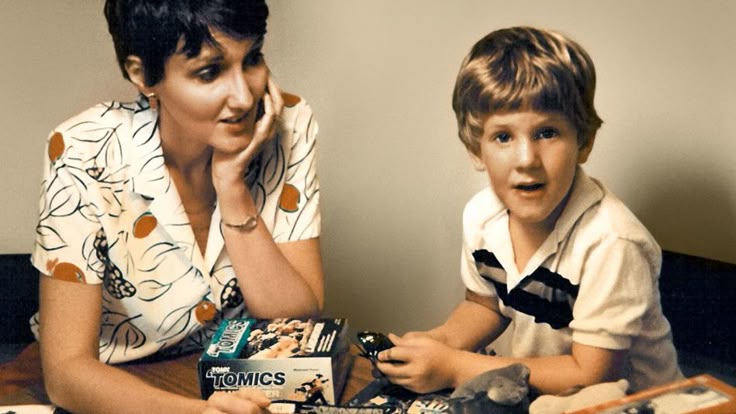
Sue Klebold wrote that she sensed a darkness the day Dylan was born, a feeling she could never fully explain. Yet Dylan never revealed that inner darkness to her. He kept much of his struggle hidden in journals and private writings, only exposing the depth of his pain in the final moments, when it was far too late for any intervention.
Jeremiah 17:9 says, “The heart is deceitful above all things, and desperately wicked: who can know it?”
It is a reminder that we cannot always see what is hidden in someone’s heart, nor can we assume we fully understand the private storms others are navigating. Neither Dylan nor Eric looked like what we imagine when we think of evil; outwardly, they appeared like countless other teenagers. Many people who eventually end up in situations like this show no clear early signs that they are moving toward ruin. Not everyone fits the familiar warnings. Some never harmed animals, never ran with the wrong crowd. Some were simply ordinary people carrying silent burdens, moving through life with hearts they never paused to examine.
Proverbs 4:23 teaches, “Guard your heart more than anything else, because the source of your life flows from it.”
I often pause to examine my own heart and pray that whatever I am not today, I will not become tomorrow. Because without intentional reflection and spiritual grounding, any of us can be surprised by thoughts or actions we never imagined we were capable of.
It has become increasingly difficult to interpret human behavior, especially because people of all ages, adolescents, adults, and even the elderly, often go to great lengths to conceal what they do not want seen. While research, therapy, and support systems for mental and emotional health continue to expand, they can only be effective when someone is willing to reach for them. Even the best interventions cannot work in silence.
And yet, we must keep trying.
Not everyone approaches mental health challenges, depression, and emotional distress, with the same understanding or urgency. Still, homes and communities can be built as safer spaces where children feel able to speak honestly about fear, failure, and confusion, whether with parents or trusted adults in their environment. Sue writes that like a bird approaching the ground with caution, parents must handle conversations about mental and emotional health with gentleness and care.
There is no place for stigma in conversations about mental health. The mind is as essential to health as the body. We do not hesitate to seek care for physical illness, and the same openness should extend inward. When mental stability breaks down, we are often left trying to rebuild from fragments, piecing together what was lost after the damage has already been done. Removing shame from these conversations creates the possibility of intervention before collapse, not only repair after it.
This is not an argument for over-surveillance or fear-driven parenting. It is a reminder that those most at risk of destructive impulses are often the ones struggling silently, and that their pain rarely exists in isolation. Left unaddressed, mental illness can move quietly and unpredictably, like a clock ticking toward crisis. Awareness, then, is not suspicion, it is care expressed in time.
We must also keep trying with God.
Apostle Joshua Selman once taught on mercy, explaining that it takes the mercy of God for children who were raised rightly to remain right. Without divine help, even the best human remains fallible, easily swayed by influence, circumstance, and doctrine. This is why Psalm 1 is not merely poetic, but foundational. Wisdom may provide direction, yet even the wisdom we impart to our children requires the sustaining mercy of God, joined with consistent prayer, to take root and endure.
In this light, God is our Heavenly Father, intrinsically good and intrinsically love, yet humanity does not always reflect His nature consistently. If this is true of us in relation to Him, how much more is it true of a parent raising a child? Parenthood, then, is not a responsibility that ends when a child becomes independent or socially functional. In many ways, it extends beyond what is visible, and there is accountability beyond what is immediate. This is why walking with God is essential, not optional. Raising a child without dependence on Him leaves something incomplete, a space within the human heart that only God can truly fill, preserve, and sustain.
We must also keep trying socially.
Alongside this spiritual responsibility, there is also a social one. We must actively work to dismantle the culture of bullying. What appears as harmless teasing to one child can become a lasting wound for another, hidden from view. Exposure to suicide and self harm can be especially damaging for vulnerable individuals, particularly when presented carelessly or sensationalized. Education is necessary, but spectacle is not. Suffering should never be turned into content.
As a society, we must also remain vigilant. This means asking questions when something feels off, staying informed, and paying attention to behavioral changes rather than dismissing them. It also means resisting the comforting illusion that tragedy happens only elsewhere. Violence does not wait for permission. Just as we teach “stranger danger,” we must also learn to speak up when something feels off. When you see something, say something. Don’t ignore subtle changes or assume they will resolve on their own. Sometimes the smallest shift in behavior can be a sign of something deeper.
Ultimately, regardless of upbringing, countless forces shape who we become. Human development is never a simple equation of nature versus nurture. The variables are wider, the influences more complex. And yet, despite this complexity, children must still be given the space and belief that they are capable of making healthy choices for themselves if they are to grow into grounded members of society. That belief, fragile yet powerful, is often the first step toward meaningful change.
Sue ends her book with a truth that lingers long after the final page: “When we can do a better job of helping people before their lives are in crisis, the world will become safer for all of us.”
For part 1 click Here